

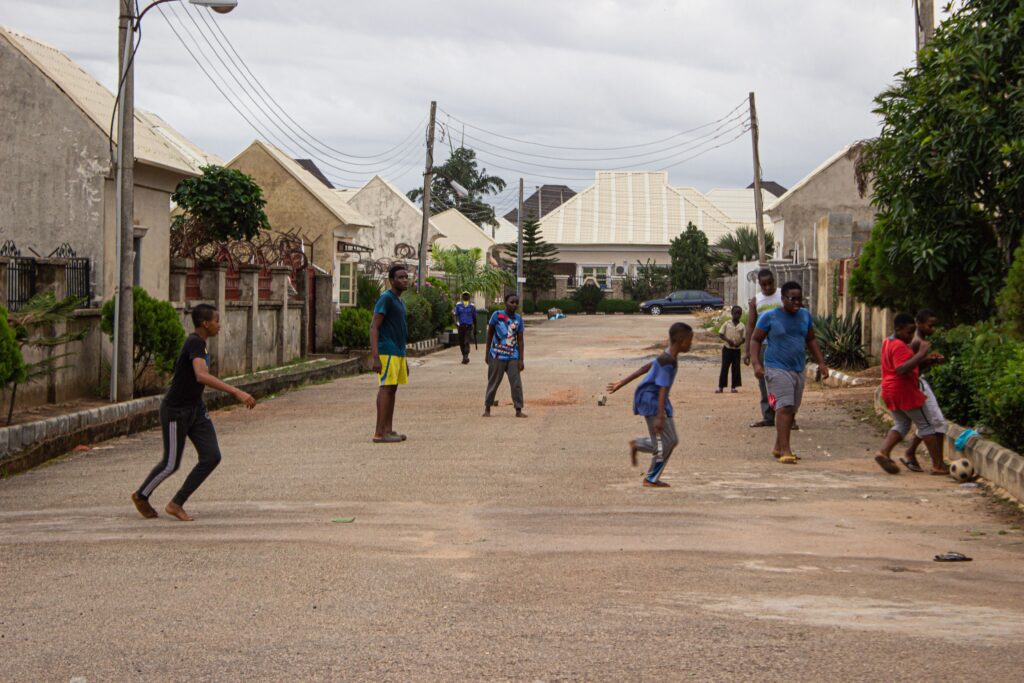
At SEEN USA, much of our work focuses on addressing the challenges facing communities in Nigeria. We talk about poverty, education, healthcare, and the many needs that still exist because those are the problems we are working to help solve…but today, we’d like to do something different.
Instead of talking about what’s wrong, let’s take a moment to appreciate what’s right.
Nigeria is a country rich in culture, resilience, generosity, and community. Like every nation, it has its strengths and its struggles. While there is still much work to be done, there are also values deeply woven into Nigerian life that many of us in the Western world could benefit from embracing.
One of those values is community.
When did we stop knowing the names of the people who live next door?
We live in an age of unprecedented connection. Within seconds, we can send a message across the world, watch events unfold on another continent or learn what an old classmate ate for dinner. Yet many of us do not know the people living only a few feet away.
We may recognize their cars. We may exchange a polite wave while collecting the mail. But would we know if they were sick? Would we notice if they had not been seen for several days? Would we feel comfortable asking them for help or offering it before they had to ask?
Technology has made it easier to contact one another, but it has not necessarily made us feel more connected.
Nigeria offers another way of thinking about community.
Nigeria is an extraordinarily diverse country, home to hundreds of ethnic groups and languages, so there is no single “Nigerian experience.” Customs also differ among regions, religions, generations and families. Still, across many Nigerian communities, there remains a strong emphasis on extended family, shared responsibility, hospitality and respect between generations.
These traditions are not perfect, nor are they practiced identically everywhere. But they raise an important question for those of us in the Western world:
Have we become so focused on independence that we have forgotten how much we need one another?
A Child Belongs to More Than One Household
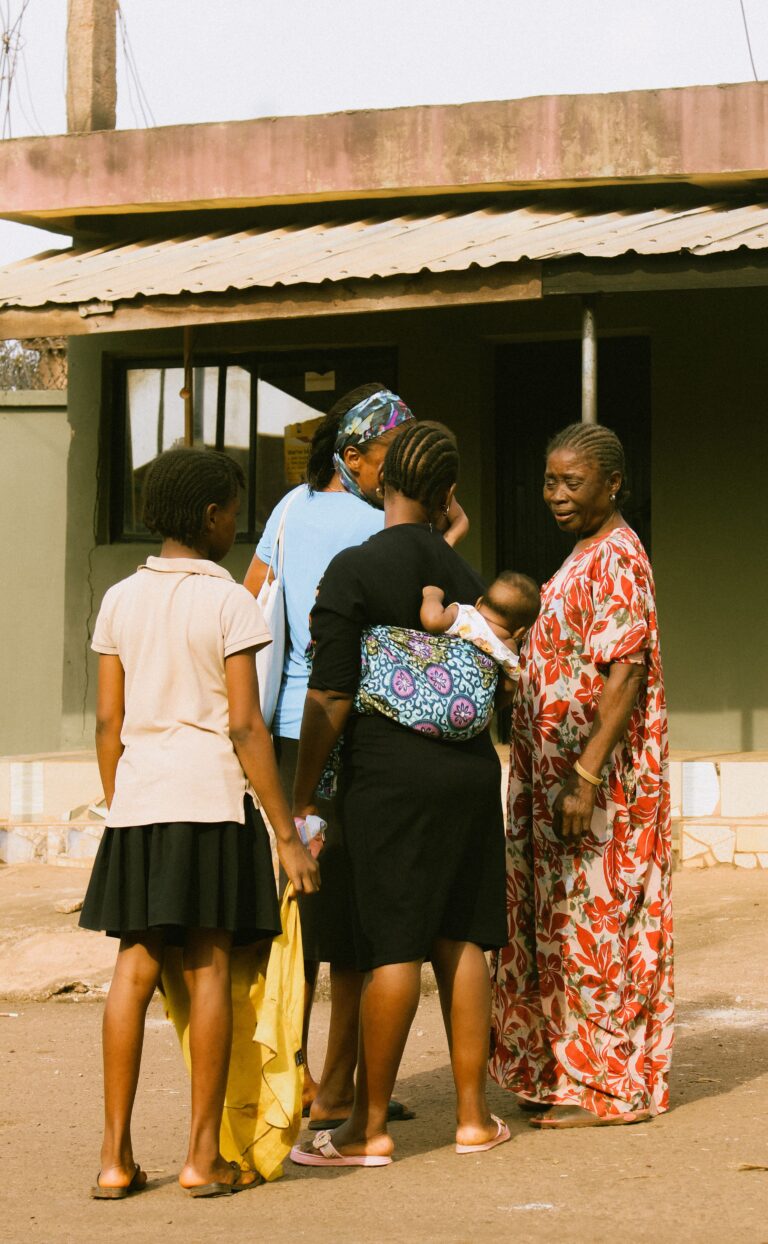
The expression “It takes a village to raise a child” has become familiar in the West, but in many communities it is more than an inspirational phrase. It reflects everyday life.
Parents hold the primary responsibility for their children, but grandparents, aunts, uncles, older siblings, family friends and trusted neighbors may also play meaningful roles. They teach, encourage, correct, protect and guide.
The words Auntie and Uncle are not always reserved for biological relatives. They can communicate affection, respect and a sense of responsibility toward another person. The child grows up knowing that care can extend beyond the walls of one home.
This does not mean that every adult should have unlimited authority over a child. Healthy boundaries and child safety remain essential. The lesson is not that parents should surrender their responsibility. It is that they should not have to carry it entirely alone.
Many Western parents are exhausted. They are trying to provide financially, manage a household, transport children to activities, support their education and remain emotionally present – all while feeling pressure to handle everything privately.
Perhaps independence was never supposed to mean isolation.
A stronger community might look like a neighbor who notices a child walking home alone, a trusted adult who attends the school performance, a grandparent whose experience is welcomed or a family friend who calls simply to ask, “How are the children?”
Neighbors Who Are More Than Familiar Strangers
In many Western neighborhoods, privacy is highly valued. Privacy is important, but it can quietly become distance.
We build fences, close garage doors and move quickly between our homes and cars. We may live beside someone for years without learning much about their life.
In more communal settings, neighbors are not merely people who happen to occupy nearby houses. They may become part of the informal support system of everyday life. They notice who is celebrating, who is struggling, who needs assistance and who has not been around lately.
That closeness can sometimes feel intrusive to people accustomed to greater personal distance. Community life requires balance; support should not become gossip, control or disregard for boundaries.
But the opposite extreme also carries a cost.
When no one wants to interfere, people can suffer unnoticed. An older adult becomes increasingly isolated. A new mother struggles silently. A family experiences an emergency, yet no one nearby knows them well enough to recognize that help is needed.
Community begins with something remarkably simple: learning one another’s names.
It grows when we stop treating every interaction as an inconvenience and begin to see attentiveness as a form of care.
Joy Is Meant to Be Shared
Nigerian celebrations are often remembered for their energy, music, food, color and participation. Weddings, naming ceremonies, graduations, religious occasions, festivals and other milestones can bring together extended families and wider communities.
The celebration does not belong only to the person at its center. Joy spreads outward.
Recent cultural events in Lagos, for example, have brought together community associations, families and multiple generations to celebrate and preserve shared history through music, dance, clothing and public participation.
There is wisdom in this.
In highly individualistic cultures, achievements can become private accomplishments. We announce them online, receive a collection of comments and then move on. But gathering together communicates something deeper:
Your joy matters to us. Your child matters to us. Your accomplishment belongs in the story of this community.
Shared celebration strengthens identity. It preserves traditions. It helps younger generations understand where they come from, and it reminds older generations that their history will continue.
Joy becomes larger when other people help carry it.
Caring Without Waiting for an Invitation
Western culture often teaches us not to impose. We may see that someone is struggling but decide to “give them space.” We tell them to contact us if they need anything, placing the responsibility on the overwhelmed person to identify a need, gather the courage to ask and risk feeling like a burden.
Community can operate differently.
Sometimes care means checking in before being invited. It means bringing food instead of vaguely offering to help. It means noticing that an older neighbor’s yard has not been tended, asking a grieving person how they are doing weeks after the funeral or calling the parent who has seemed unusually quiet.
This kind of attention does not require wealth. It requires presence.
Of course, support must be respectful. We should listen rather than assume, offer rather than take over and remain mindful that not everyone wants the same kind of help.
But there is a meaningful difference between respecting someone’s privacy and becoming indifferent to their pain.
Perhaps we have become too afraid of awkwardness. Community asks us to risk the slightly uncomfortable phone call, the knock at the door or the sincere question that cannot be answered with a social-media reaction.
Respecting the Generations That Came Before Us
Many Nigerian cultures place significant value on honoring elders, although the customs and expectations vary considerably. Elders may be viewed as keepers of family history, cultural knowledge and lived experience. Research on elder care in Nigeria describes respect for older people as an important value across different cultural groups, even as its expression changes according to region, religion, class and modern family life.
Respect does not mean that an older person is automatically correct, beyond accountability or entitled to control another person’s life.
It means recognizing that longevity carries stories.
In the Western world, we often celebrate youth, novelty and speed. New ideas matter, but so does memory. When generations become disconnected, families lose more than old photographs. They lose explanations, lessons, traditions and firsthand accounts of how earlier hardships were survived.
A healthy community makes room for the energy of the young and the wisdom of the old.
It asks older people to remain engaged rather than invisible. It gives younger people a voice without teaching them that everything before their time is outdated. It creates a conversation between generations rather than a competition among them.
Community Is Not a Place. It Is a Practice.
Nigeria faces serious challenges, and communal culture alone does not solve poverty, inequality, conflict or gaps in public services. Strong family and community expectations can also create pressure, obligations and blurred boundaries.
This is not an argument that one culture is superior to another.
Western societies offer important lessons about personal freedom, individual rights, privacy and the ability to build a life beyond the expectations of one’s family or birthplace. Those values should not be discarded.
But independence and community do not have to oppose one another.
We can respect privacy while still noticing when someone is missing. We can encourage personal freedom while teaching responsibility toward others. We can protect healthy boundaries without constructing emotional walls.
Perhaps that is the lesson worth carrying forward: a meaningful life is not built solely through what we achieve for ourselves. It is also built through the people we welcome, remember, encourage and help carry.
Community is not created by living near one another. It is created by choosing to care.
So today, perhaps we should ask ourselves:
Do I know the names of the people who live next door?
And if the answer is no, perhaps that is where rebuilding community can begin.